
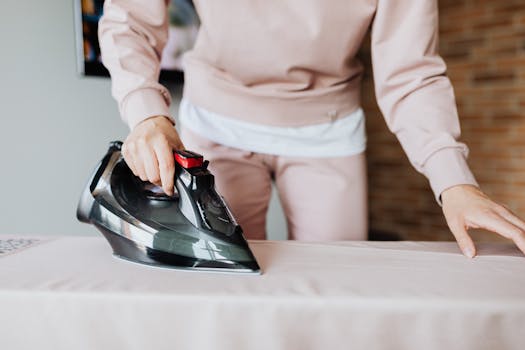
Imagine getting dressed for an important meeting. You pull your favorite shirt from the closet, only to find it wrinkled and limp. Even though it is clean, it looks untidy, and your confidence instantly drops. Now picture picking up the same shirt, freshly ironed, crisp, and sharp. As you slip it on, it fits not only your body but also your mood. You suddenly feel ready, professional, and composed. That is the power of ironing. It transforms clothes from fabric into a statement of care, style, and presence.
Prescotts Laundry Services, located at 1711 E Broadway Rd, Tempe, AZ 85282, provides ironing services and guidance as part of their broader mission to support customers with every step of the laundry process. Ironing may seem like a basic household task, but it connects fabric care, hygiene, and personal presentation. In this guide, we will explore ironing in depth, from its history and methods to challenges, case stories, and modern innovations.
Ironing refers to the process of removing wrinkles and creases from clothing by applying heat and sometimes steam using an iron or professional press. The fabric fibers soften under heat, allowing them to be stretched and flattened into a smoother form. This gives garments a crisp, clean appearance, often necessary for formal wear, uniforms, or professional attire.
Ironing is not purely aesthetic. Proper ironing extends garment life, contributes to hygiene by killing bacteria through heat, and maintains the texture of fabrics. For laundromats like Prescotts Laundry Services, ironing represents the final touch of care that complements washing and drying.
The history of ironing goes back over a thousand years. Early societies used heated metal pans, stones, or glass tools to flatten fabric during weaving or after washing. By the seventeenth century, irons had taken shape as heavy cast metal slabs that were heated on stoves.
With industrialization, electric irons emerged in the late nineteenth century, making the process faster and safer. Steam irons, introduced in the mid-twentieth century, further revolutionized the practice by tackling stubborn wrinkles more efficiently.
Today, ironing ranges from home-based steam irons to large industrial presses used in laundromats and hotels. Prescotts Laundry Services utilizes modern tools to deliver both convenience and professional quality.
The science of ironing is relatively simple yet elegant. Fabric consists of fibers that hold creases caused by washing, folding, or drying. Applying heat relaxes the bonds between fibers, while pressure flattens them into smooth alignment.
Different fabrics respond in distinct ways. Cotton requires high heat for effective wrinkle removal, whereas silk demands low heat and delicate treatment. Wool benefits from steam and pressing rather than dragging, to maintain shape.
Modern irons integrate temperature gauges, steam releases, and even non-stick plates to improve safety and protect fabrics. Industrial systems at laundromats add accuracy and speed, handling garments in bulk while ensuring consistent results.
The first benefit is aesthetic presentation. Wrinkle-free clothing signals care and professionalism. Whether for business attire, school uniforms, or special occasions, ironing improves how individuals are perceived.
The second benefit is fabric maintenance. Regular ironing enhances the longevity of clothes by resetting fibers to their original structure. It prevents distortions that occur when creases are left to set.
Hygiene is a lesser-known advantage. Heat from irons or steam can kill dust mites, bacteria, and mildew spores, keeping clothes fresher.
Finally, ironing provides psychological satisfaction. Wearing sharply pressed clothes boosts confidence, helping people present their best selves at work, school, or social events.
Despite its benefits, ironing comes with challenges. Time is the most common complaint. Ironing a family’s weekly laundry can take hours, making it difficult for busy households.
Fabric risk is another issue. An incorrectly set iron can burn or permanently damage delicates such as silk or synthetic fibers.
In addition, not all wrinkles are easy to remove. Thick fabrics like denim or linens often require repeated passes or professional equipment.
Prescotts Laundry Services addresses these challenges with trained staff who understand fabric science, using professional presses and temperature controls to achieve optimal results while protecting garments.
Prescotts Laundry Services includes ironing as part of its comprehensive approach to laundry care. Customers who bring clothing for wash and fold can choose ironing as an add-on, ensuring garments leave the facility not only clean but pressed and ready to wear.
Staff are trained in fabric-specific techniques, from steaming suits to pressing school uniforms. This prevents common mistakes made during home ironing and saves customers valuable time. By combining convenience with expertise, Prescotts turns ironing into a worry-free service.
Consider the story of Raj, a young professional working in Tempe. Raj often wore dress shirts and trousers for his corporate job. At first, he tried ironing at home but quickly became overwhelmed. Between long hours at work and evening commitments, stacks of wrinkled shirts sat untouched, making him look less polished at client meetings.
On a friend’s recommendation, Raj visited Prescotts Laundry Services. He dropped off his laundry and added the ironing option. A few days later, he returned to find his shirts crisp, trousers neatly pressed, and even his casual wear looking sharp.
The difference was immediate. Raj no longer struggled with an iron late at night. He simply reached into his closet each morning and retrieved ready-to-wear outfits. His confidence improved, and his reputation at work soared.
Raj’s experience shows how access to professional ironing services turns a stressful weekly burden into a source of ease and presentation.
Ironing involves not only flattening fabrics but also keeping them fresh and sanitary. Steam irons can neutralize allergens and bacteria during the process. Professional facilities further sanitize garment surfaces by maintaining clean pressing equipment.
Safety requires attention to details such as avoiding burns, unplugging devices after use, and storing irons in safe places. At laundromats, strict protocols ensure safe machine operation, protecting staff and customers alike.
Modern advancements have made ironing more efficient. Steam generator irons produce stronger, continuous steam flows for stubborn wrinkles. Cordless irons improve maneuverability.
Industrial presses, common in laundromats like Prescotts, standardize the process for uniforms, linens, and bulk loads. These machines save time and deliver perfect creases consistently.
Innovations such as fabric-sensitive sensors and automatic shut-offs ensure compatibility across textiles while reducing risks of burns or energy waste.
Ironing consumes significant household energy over time. Laundromats reduce redundancy by pressing large batches at once, lowering per-garment energy consumption compared to individual efforts.
Economically, customers weigh the costs of ironing services against the time saved. For busy professionals or families, outsourcing proves worthwhile, delivering both convenience and high-quality finishes.
Sustainable practices include choosing energy-efficient appliances, air-drying clothes before ironing to reduce cycle time, and minimizing unnecessary ironing by folding correctly.
Ironing holds social meaning beyond hygiene. In many cultures, pressed clothing equates to respectability and pride. Schoolchildren in uniforms, wedding attire, and ceremonial garments illustrate how ironing supports tradition and identity.
In daily life, ironing mirrors personal care and discipline. It communicates reliability, making ironing a subtle but powerful part of social presentation.
Preparation ensures effective results. Clothes should be washed and dried before ironing. Sorting by fabric type prevents damage. Filling steam irons with distilled water reduces mineral buildup and prolongs appliance life.
Using an ironing board with a padded surface allows both flexibility and even pressure. For delicate items, placing a thin cotton cloth between the iron and the garment avoids direct heat damage.
Prescotts Laundry Services applies these systematic steps for professional results, handling garments responsibly while ensuring customer satisfaction.
The future may include ironing robots, wrinkle-resistant smart fabrics, and appliances with artificial intelligence that select heat based on fiber scans. Eco-friendly steam systems and presses that minimize energy consumption will also rise in demand.
Prescotts Laundry Services positions itself to integrate such innovations while maintaining the human touch of service that customers trust.
Ironing keeps clothes wrinkle-free, neat, and professional in appearance. It also contributes to hygiene by eliminating bacteria during the heating process.
Most garments have care labels that indicate recommended ironing settings. Cotton requires high heat, while silk and synthetic blends should be ironed at low temperatures, often with a protective cloth.
Not all. Some fabrics, like nylon, polyester, or delicate lace, may melt or warp under high heat. For these, steaming or pressing with a cloth barrier is more suitable.
It costs more than ironing at home, but for many people, the time saved and quality results justify the price. Professionals prevent mistakes and deliver consistent finishes.
Folding clothes immediately after drying, using dryer settings that reduce wrinkles, and storing garments properly all help limit ironing frequency. Choosing wrinkle-resistant fabrics also reduces effort.